
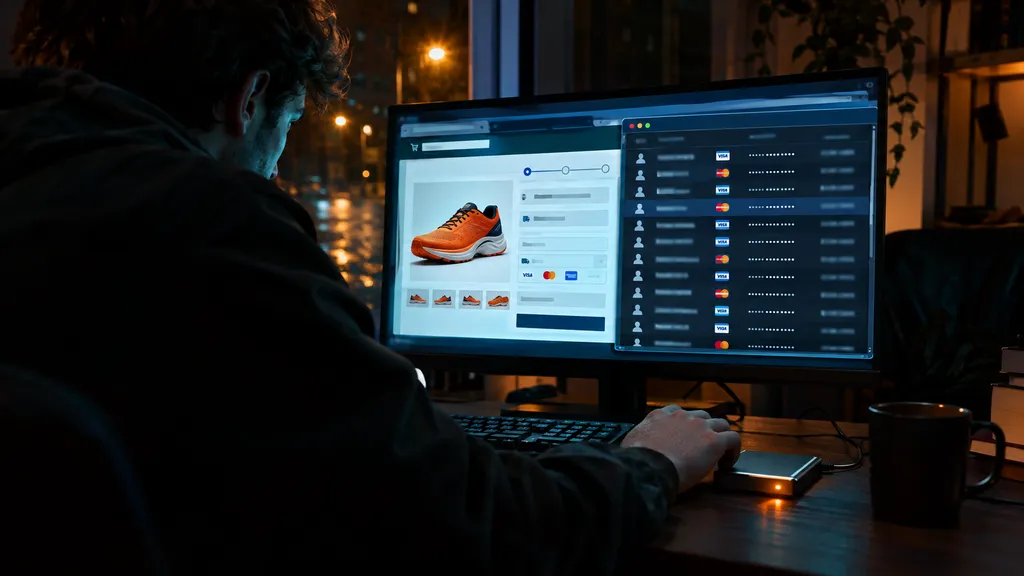
A customer orders a single energy gel and pays to ship it across the country. Maybe it’s a flavor they can’t find locally. But when your team opens the order queue the next morning and finds a dozen similar purchases, that first order deserves a second look.
That’s where a running store has an advantage. The person who packs your online orders knows what a normal Tuesday looks like. They know which socks customers reorder, how far people typically ship a pair of shoes, and how often someone buys just one gel. A change in those patterns can be the first clue that something needs attention.
When small orders start to add up
With card testing, someone uses stolen payment details to make small purchases and see whether a card still works. For a running store, those purchases can look ordinary at first. Gels, socks, and other accessories are exactly what you’d expect customers to buy.
The reason to pause is the pattern. If several unusually small orders arrive close together, look at them as a group before printing the shipping labels. Check whether they share a shipping address or whether the timing and quantities are unusual for your store. A single order may have a perfectly good explanation. Seeing the orders together gives your team a better basis for deciding which ones need review.
Pay attention when the shipping address changes
Sometimes the most important detail arrives after checkout. A pair of shoes is paid for, the box is packed, and an email comes in asking your team to send it somewhere else. It’s an easy change to make at the label printer. It’s also the moment to pause and verify the request through contact information already associated with the order.
Two details can give an order more credibility than they should: a successful payment and a familiar customer name. A stolen card can receive an authorization, and someone who gains access to an established account can place an order under a regular’s name. If the request seems out of character, a quick conversation before the carrier arrives can clear things up for everyone.
Understand why a delivered order can still be fraudulent
One of the trickier situations involves a fake storefront. A runner buys shoes from a seller they believe is legitimate. That seller uses stolen payment details to order the same shoes from your store and has you ship them to the runner. Your team fills the order, the runner receives exactly what they bought, and the actual cardholder later disputes the charge.
That distinction matters when you’re piecing together what happened. A tracking number can confirm delivery. It can’t tell you who authorized the payment. And the person who answers the door may be another customer caught in the scam.
Give the packing team a clear next step
When an order raises a concern, hold it before shipment and review the transaction in your payment gateway. If the review points to fraud, flag the payment with your processor and let RunFree support know what you found. Similar activity at another store can give an isolated incident useful context.
The most practical change you can make is to decide who reviews a questionable order before the next one comes in. On a busy Saturday, the associate holding the shoebox should know who can check the payment, who can verify an address change, and who makes the call to ship. That keeps routine orders moving and gives your team time to investigate the ones that need it.
Watch the full Sprint TV episode on online fraud in run specialty retail.